
About
#Hausflotte is an initiative that arose as part of one of our co-innovation projects at Digital Hub Mobility. On this page, you will find information about neighborhood car sharing and how you can get started yourself.
What Is #Hausflotte?
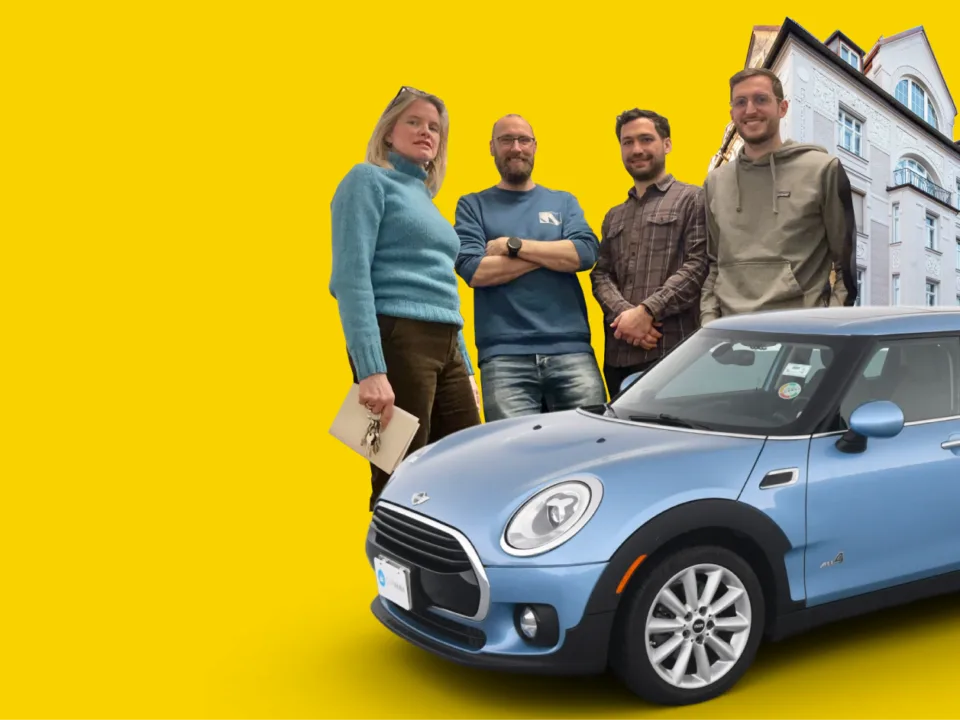
In a Hausflotte, neighbors, friends, or a house community come together to share private cars or other means of transportation. To do this, at least one person makes a vehicle available for sharing with the other members of the Hausflotte.
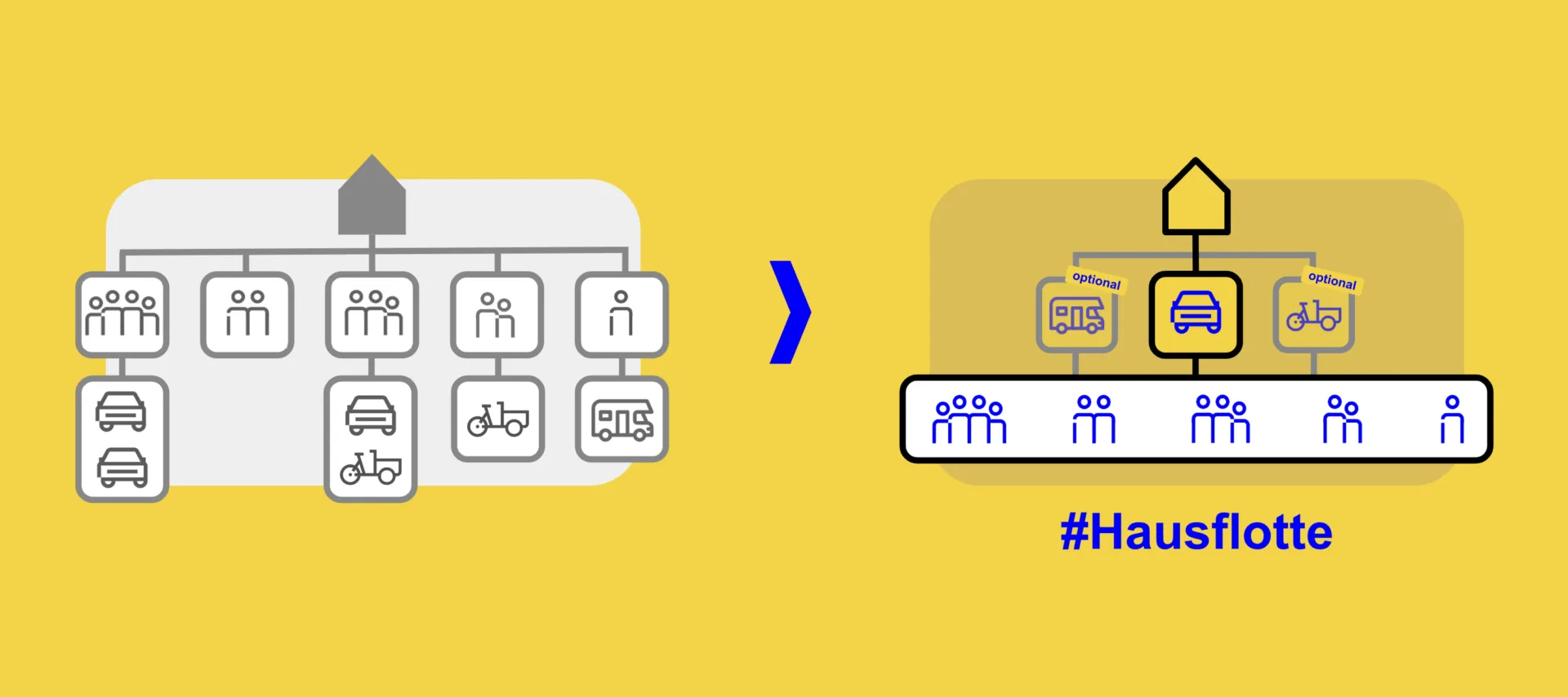
Who Is #Hausflotte For?
Why #Hausflotte?
- 48.8 million cars in Germany
- 23 h is how long the average car sits parked every day
- 60% of car owners in Munich don’t depend on their car
- EUR 425 is what the average car costs per month

[1] Kraftfahr-Bundesamt, January 2023 | [2] Umweltbundesamt, 2022 | [3] BMW AG / KIT, 2020 | [4] Andor et al., 2020
With #Hausflotte, You Can Be Part of the Solution
What People Say About #Hausflotte
The #Hausflotte Journey
By playing, you agree that content from YouTube will be loaded.
FAQ
How much does it cost?
There are no costs for car owners. Any potential additional costs for insuring your Hausflotte participants can be covered by the fair usage price. By sharing your car, you can even save money, as you share your car ownership costs with your Hausflotte participants.
As a car user, you pay the agreed usage fees. This may also include additional costs for your insurance coverage. In general, using a Hausflotte car is cheaper than using a commercial car-sharing car.
How does the insurance work?
Hausflotte members can be insured through their existing car insurance or supplementary insurance.
What distinguishes Hausflotte from other car sharing providers?
The main aim of a Hausflotte is to cover costs and share the car on a recurring basis with the same people in your neighborhood. This means that prices are lower than for commercial car sharing.
If you would like to earn money by sharing your car, SnappCar and GetAround offer a good deal.
While commercial car sharing and private car rental companies have fixed rules and terms and conditions, you can determine these yourself for your Hausflotte. You decide when, for how long, and where the car can be used. In addition, the group of users remains the same. This creates mutual trust.
With a Hausflotte, you always have the same car with the same equipment at your disposal.
But doesn't everyone want to use the car at the same time?
It may happen that at certain times (weekends, holiday periods) several Hausflotte participants need the vehicle at the same time. Our first pilot project showed that good coordination is advantageous in this regard. In addition, Hausflotte participants with different needs can come together, thus avoiding overlaps. A backup plan can also be helpful, for example using public transportation or a commercial car-sharing provider.
Does this only work in big cities?
No, in principle, a Hausflotte can also work in the suburbs of large cities or in rural areas. Especially if there is little or no commercial car sharing available, a Hausflotte is a great alternative or supplement.
Hausflotte vehicles are vehicles that are only used occasionally by their owners (in rural areas, for example, a second car). In addition, the vehicle should be easily accessible to all Hausflotte users.
How can I participate and what support will I receive?
Anyone can share a car with their neighbors or friends.
What happened in the Hausflotte project?
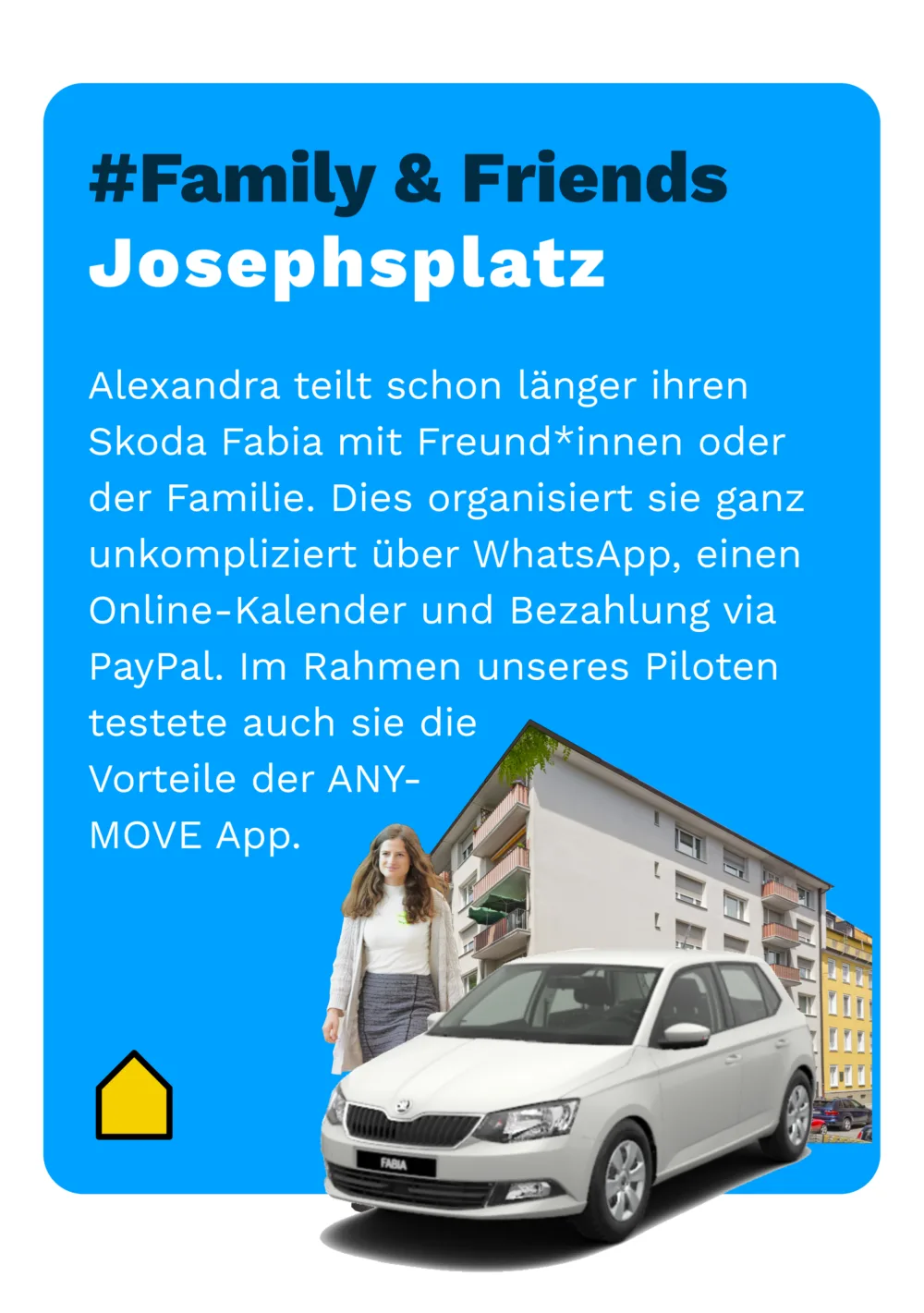
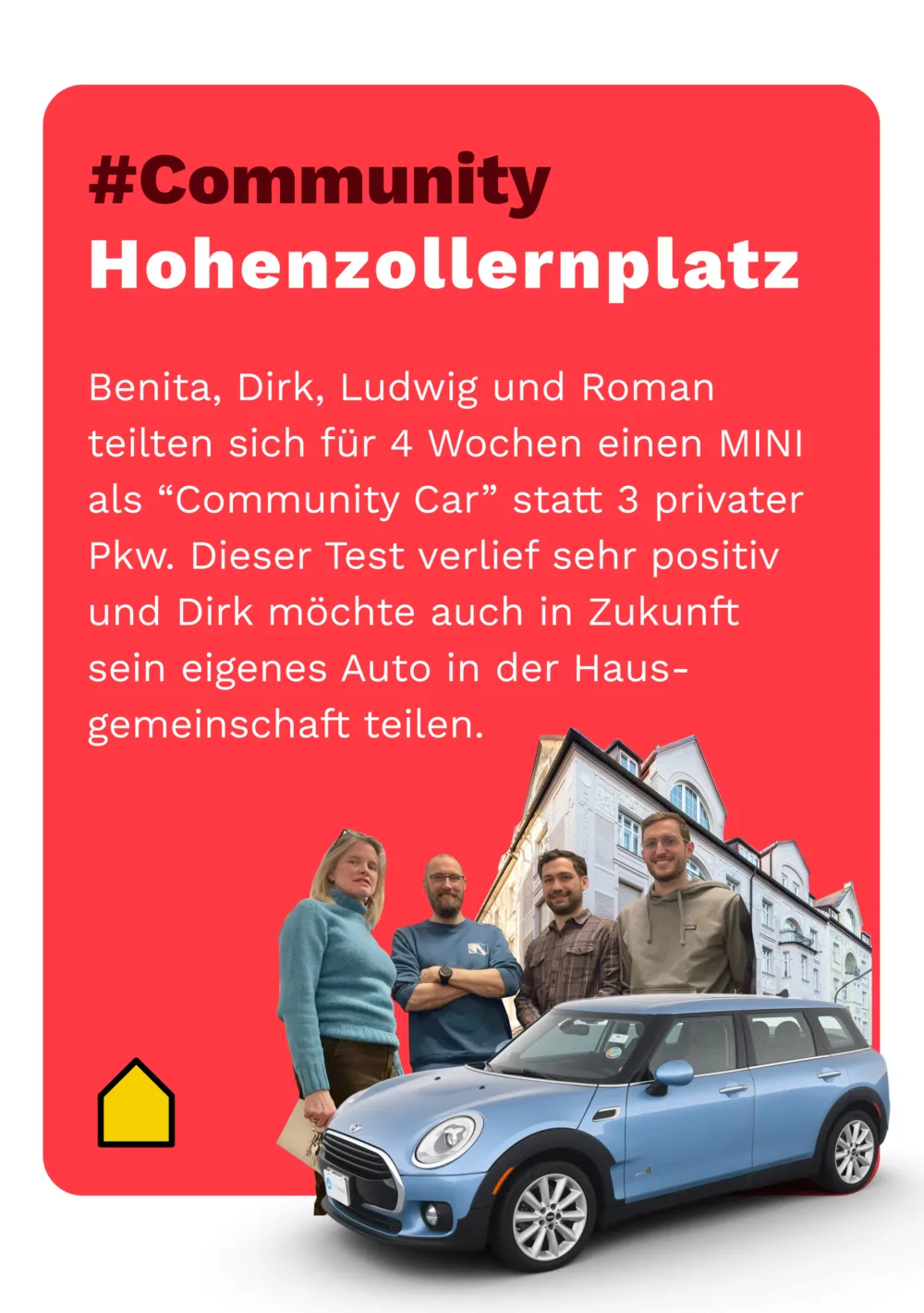
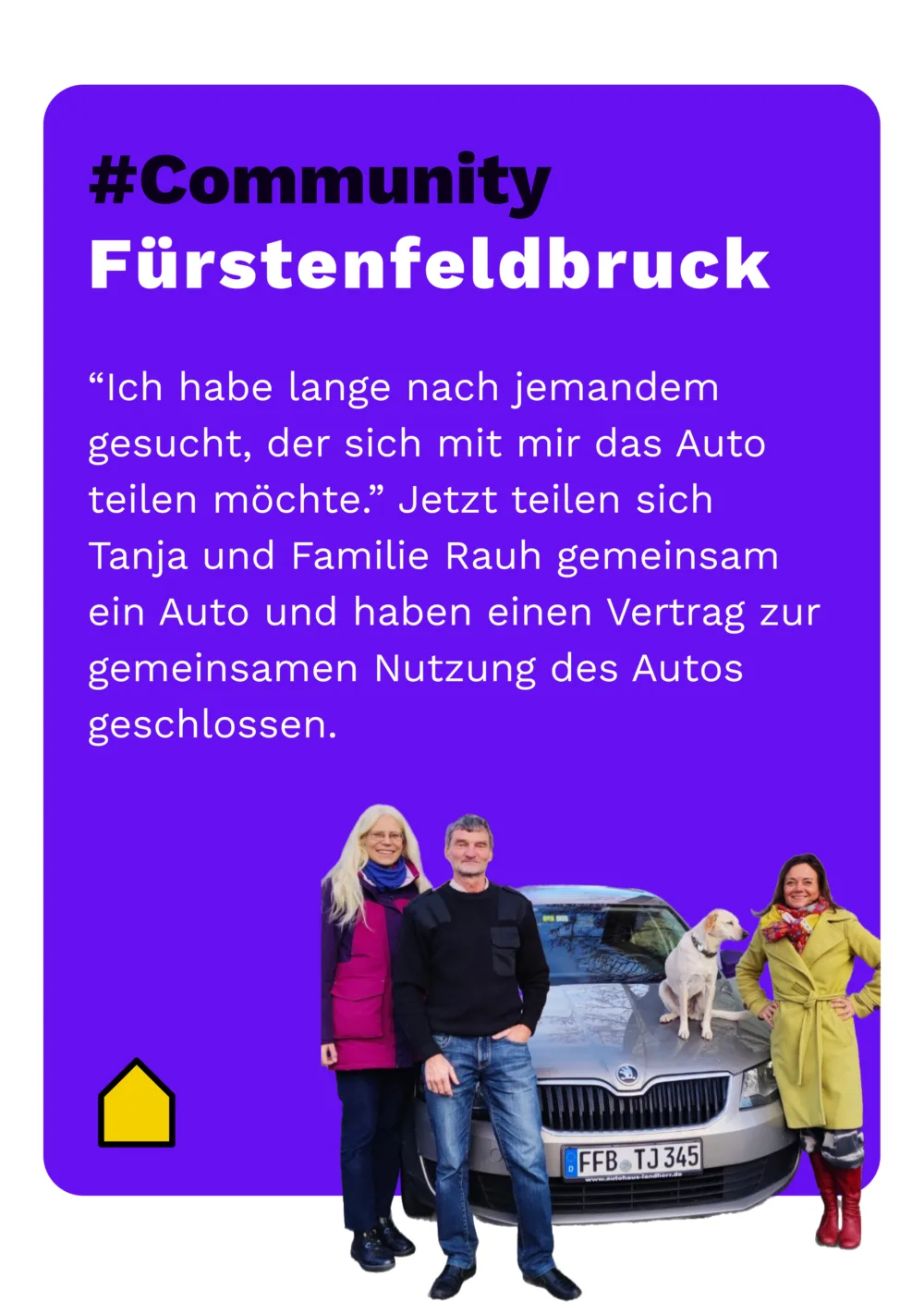
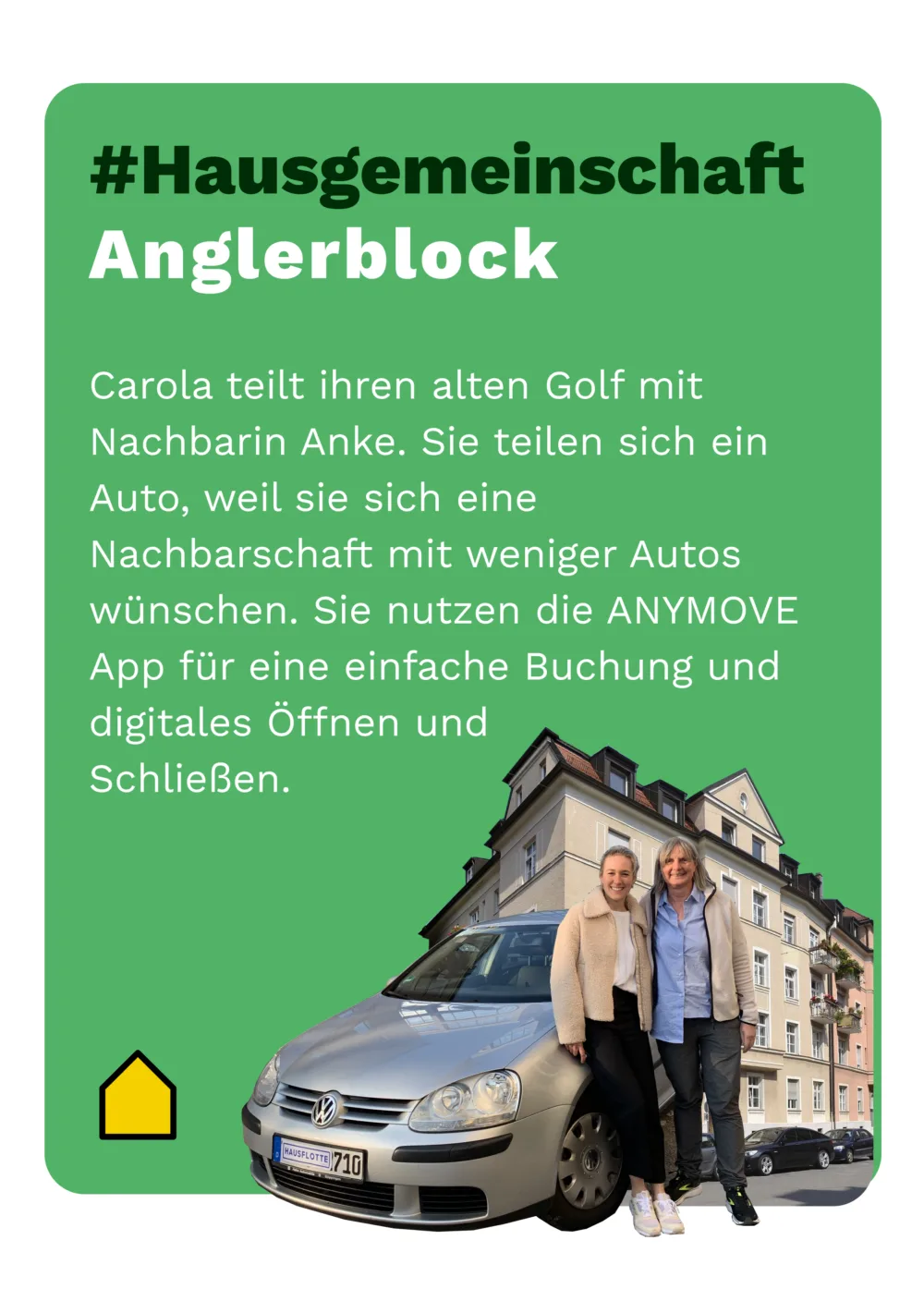
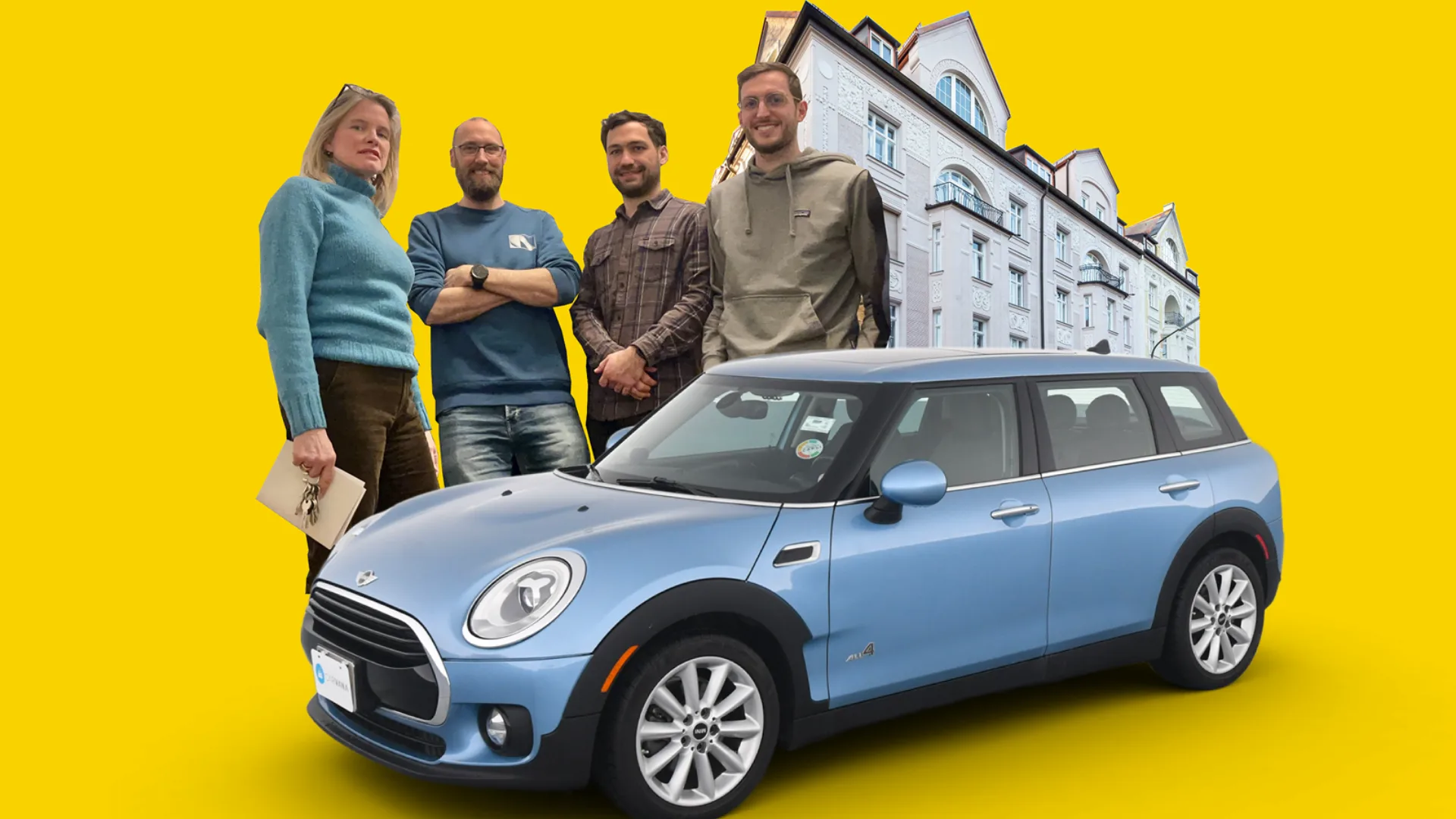
In a pilot phase from January to May 2023, we tested different variants in three Munich Hausflotten (among neighbors, among friends, with a community car) and learned a lot about the challenges and potential of private car sharing.
What are the findings so far?
The Hausflotte project has shown that citizens are motivated and that non-commercial sharing of private cars is possible. Many expressed a desire to contribute to the transport revolution, try out new concepts, and reflect on their own car use.
However, trust among co-users and geographical proximity are important prerequisites. Accordingly, our focus is on sharing among friends, in the household community, or in the neighborhood.
According to the participants, the biggest barriers to entry include legal concerns regarding car insurance and taxes, but also the challenge of finding co-users.
However, the interviews with the participants also show that there is potential and motivation for private car sharing.
“I think it's good when my car is used more. I also like the charitable idea,” said participant Carola.
Digital solutions in particular make it easier to organize a #Hausflotte. However, scaling up with a self-sustaining business model is difficult under current conditions. Real incentives, such as higher parking costs, are still lacking.
Who does that? Who is behind it?
#Hausflotte was a one-year project in the citizen mobility format. Over a period of six months, experts from companies, startups, and the city administration worked together with the Digital Hub Mobility team to develop prototype solutions that were tested directly with users in the city. Together, they developed and implemented solutions for the mobility of tomorrow.
Project partners in the Hausflotte project:
Administration: City of Munich Mobility Department
Companies: MVG/SWM, BMW Group, Designit (design agency)
Startups: Anymove, LeihDirMeinAuto
The project was also funded by the Bavarian State Ministry of Economic Affairs, Regional Development, and Energy.
Digital Hub Mobility is the mobility team at UnternehmerTUM, Europe’s leading center for innovation and business creation.
The goal of Digital Hub Mobility is to achieve sustainability goals and strengthen the mobility industry through innovation.
Still haven't (read) enough of the #Hausflotte?
Any more questions?
Do you have questions or suggestions about the project? Would you like to promote neighborhood car sharing in your project or city and learn more about our findings from the project? Then feel free to send us an email.
Please be patient if you don't receive an immediate response from us. We completed the Hausflotte project in January 2023 and are currently tackling the next challenge in urban mobility. Find out more here.