
1. Challenge
As more electric trucks are put into service, fleet operations are becoming much more complex. Most existing planning and operating processes have not yet been adapted to the specific needs of e-trucks. In many companies, charging is planned manually, often with spreadsheets, hands-on experience and last-minute coordination during day-to-day operations.
Companies often lack full visibility into the charging infrastructure that is available, the time slots they can plan around, and reliable ways to book them. Uncertain dwell times and poor coordination make operations inefficient and make it harder to scale e-truck fleets profitably.
At the same time, depot operators are asking how they can open their charging points to third parties without disrupting their own operations or putting their energy supply at risk.
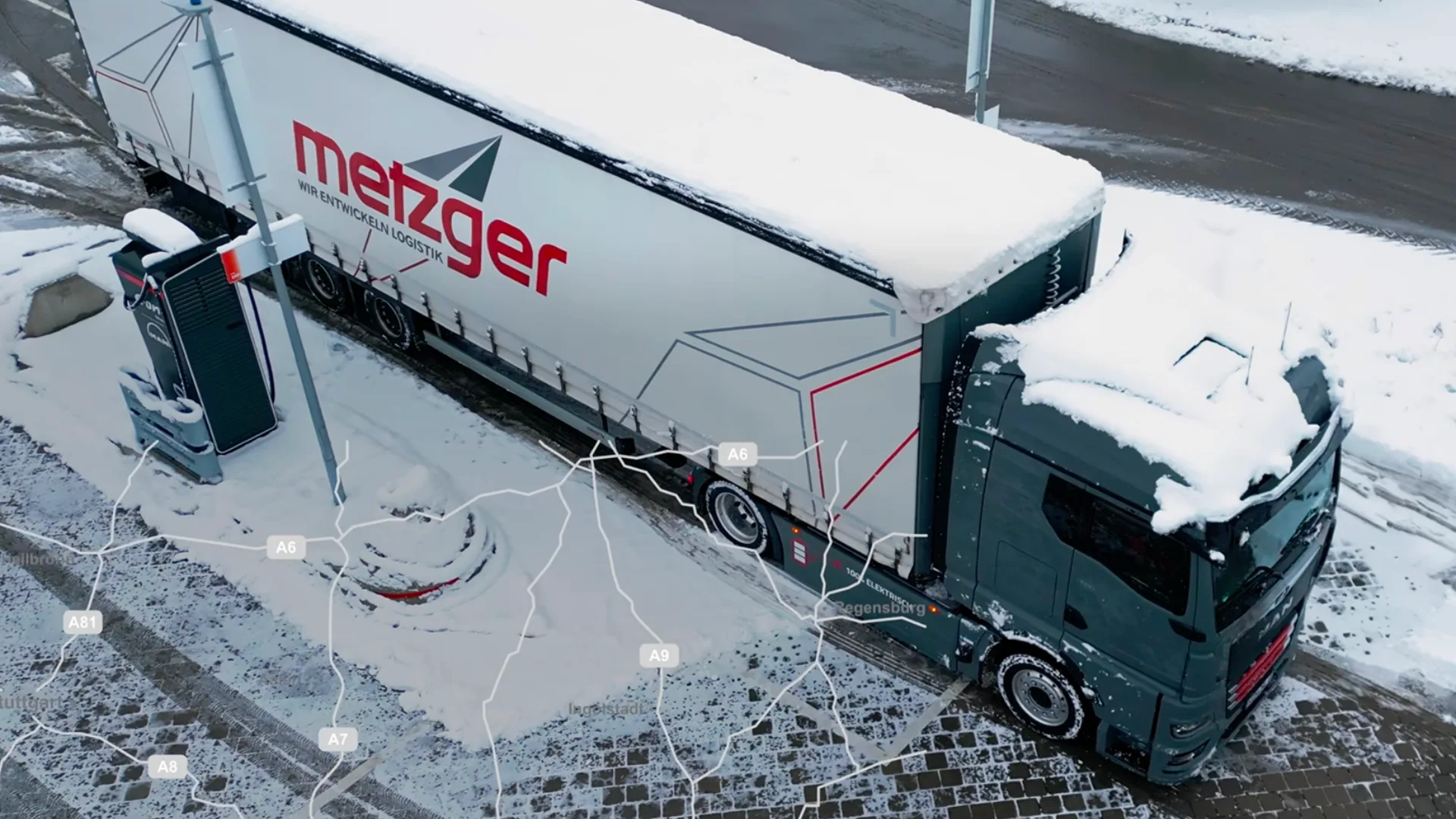
By playing, you agree that content from YouTube will be loaded.
2. Truck Charging Is Teamwork
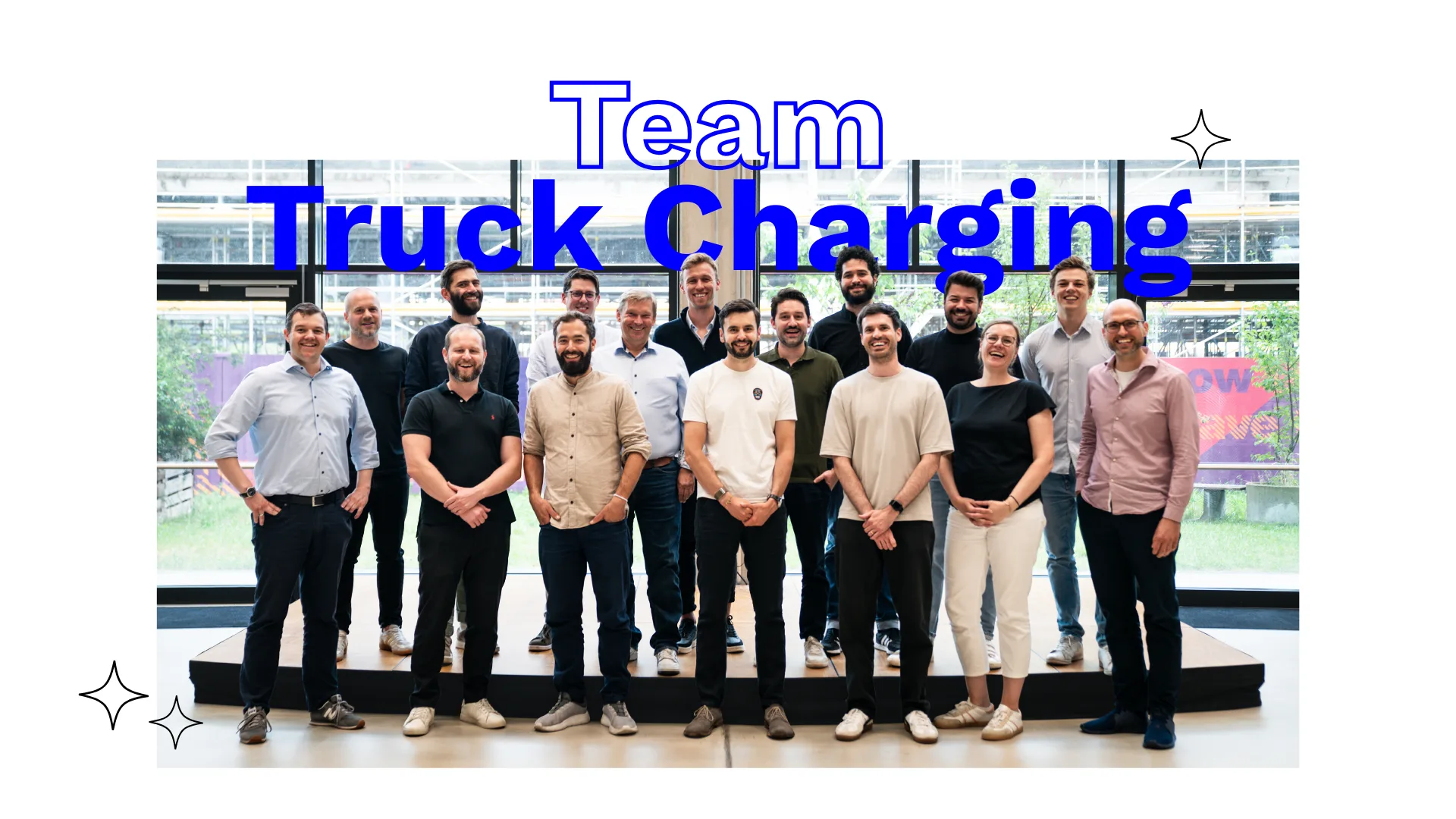
In the TRUCK CHARGING co-innovation project, we brought together key players from across the value chain to speed up the electrification of logistics. Established companies, startups, and municipal representatives from industry, energy, logistics and technology worked together in a structured process with workshops every two weeks.
Over six months, the project partners jointly built a working MVP of an interoperable booking system for e-truck charging. The work covered every stage, from defining the problem through technical integration to testing in live operations.
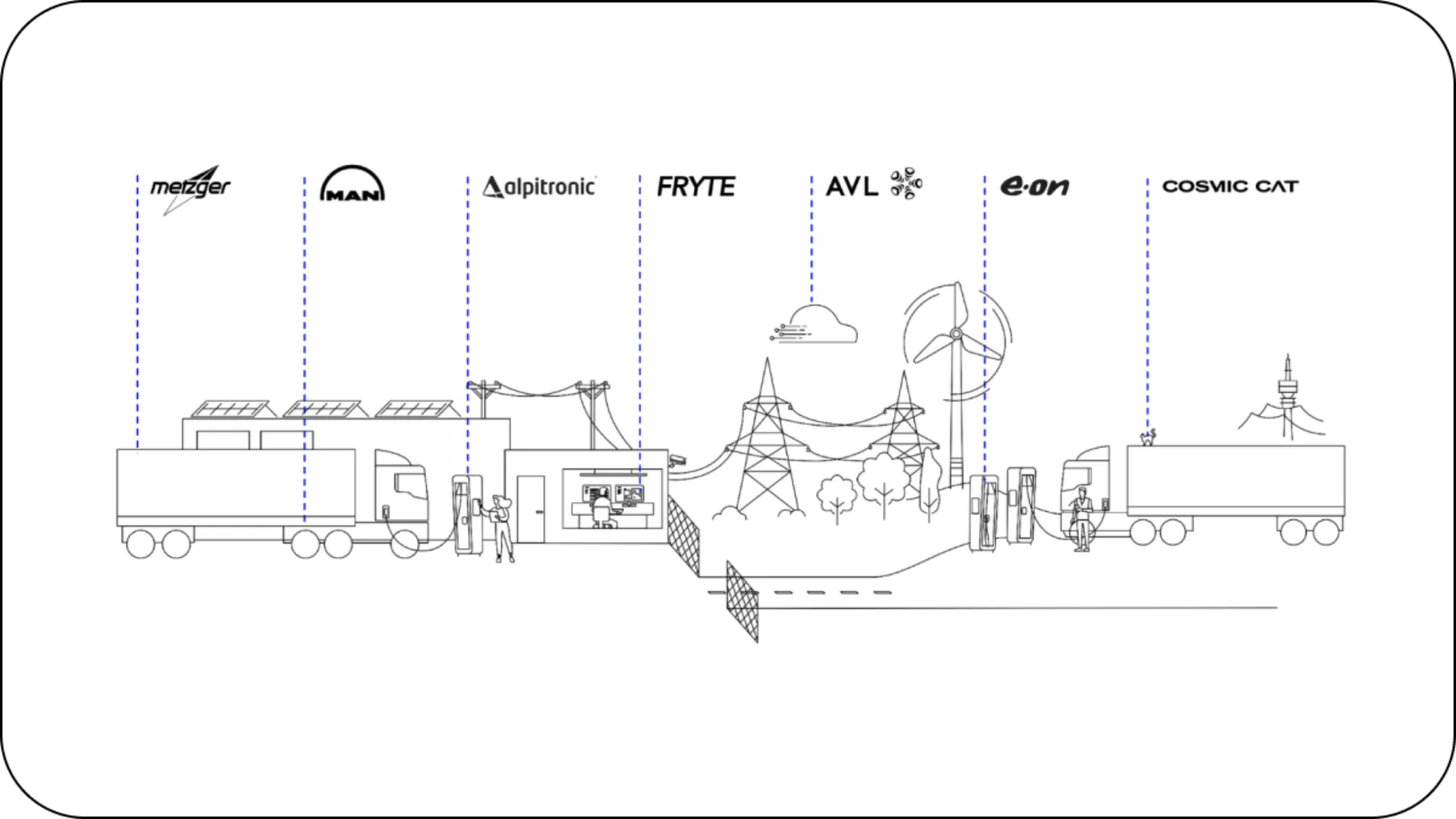
Truck Charging Supply Chain
3. Our Approach
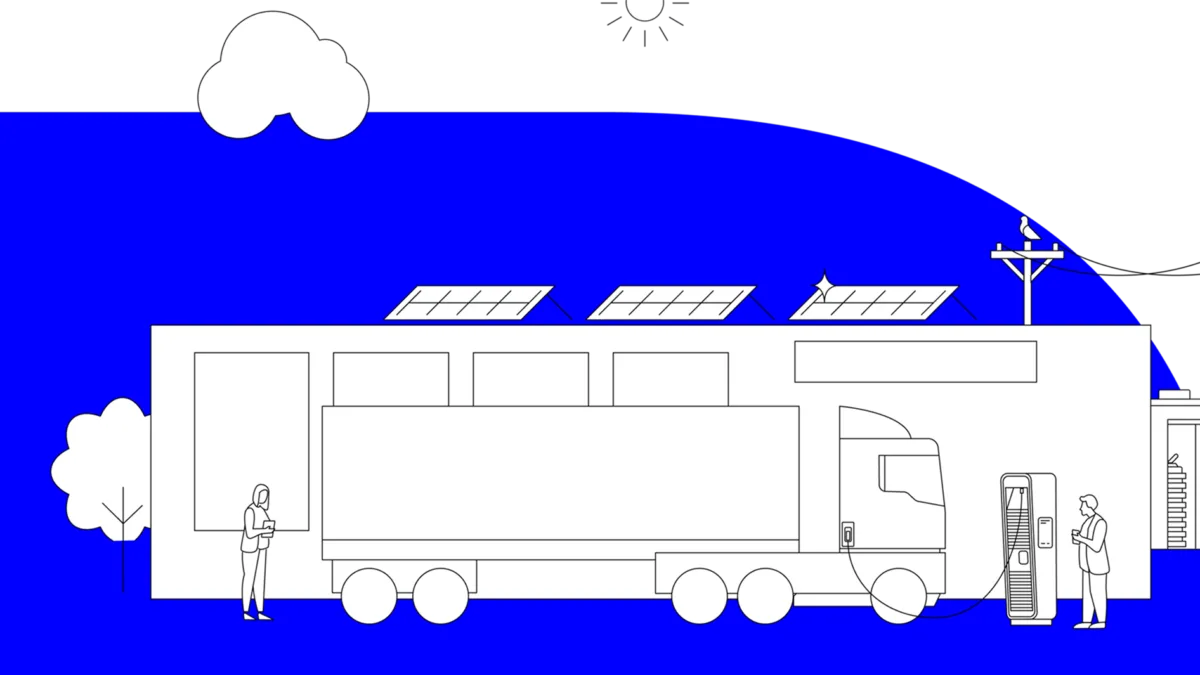
As part of TRUCK CHARGING, we developed an interoperable booking system for e-truck charging points. It matches the charging infrastructure available at depots and in public spaces with demand from fleet operators, so that charging time slots can be booked reliably and in advance.
This gives fleet operators planning certainty and helps depot operators manage how fully their charging points are used, laying the groundwork for electrifying logistics at scale.
Benefits for logistics companies
Benefits for depot operators and public charging providers
The booking system was designed to connect existing infrastructure, platform, and fleet systems. Standardized interfaces, including OCPI, allow different providers and systems to communicate with each other. This enables charging time slots to be booked across manufacturers and operators. Interoperability creates the technical foundation for linking depot and public charging infrastructure efficiently and using it at scale.
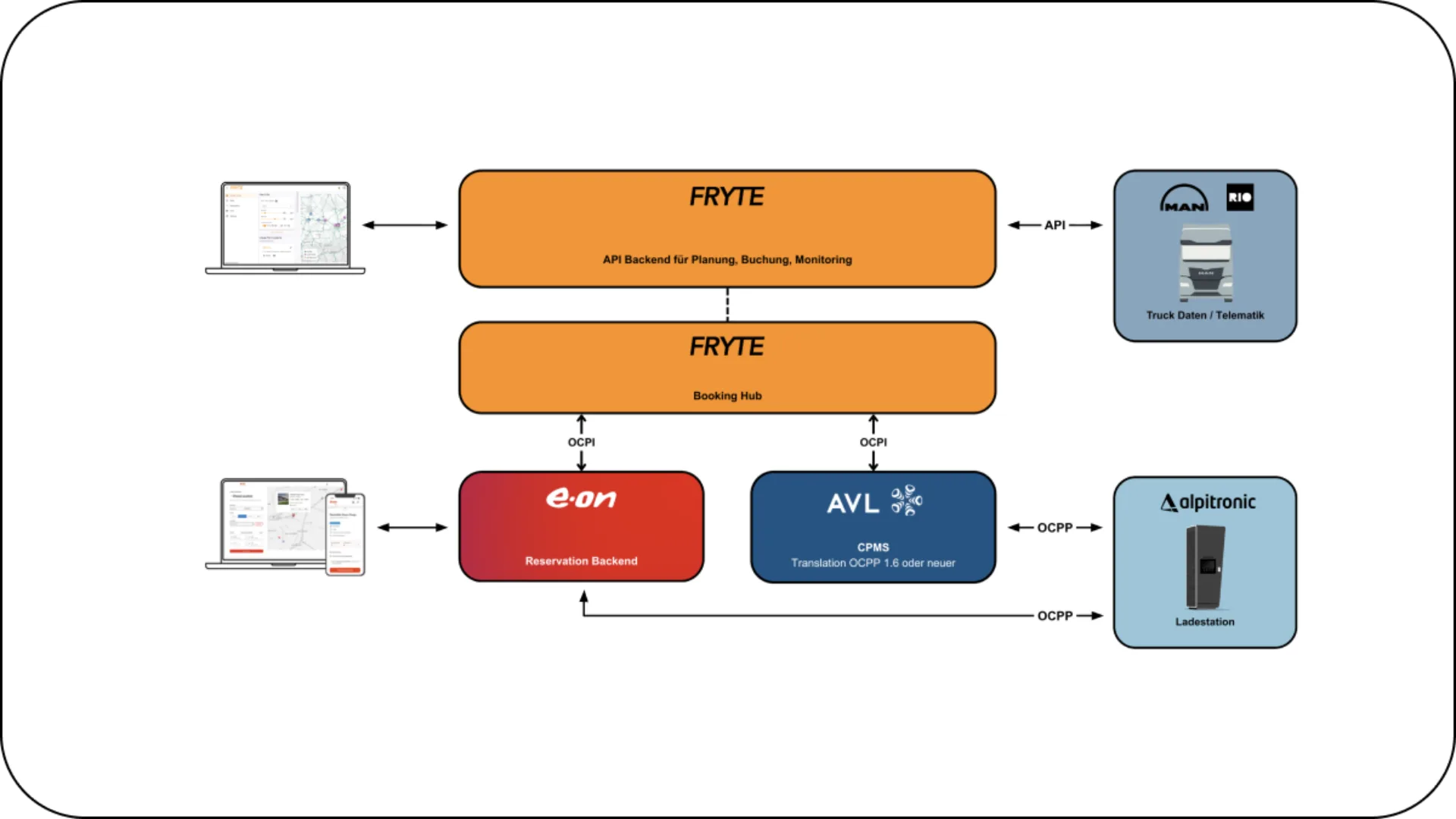
Interoperable booking system
4. Project Partners








Hear From Our Partners
Outlook
Building on the results of the TRUCK CHARGING co-innovation project, we are planning new projects for 2026 that tackle key challenges in electrifying heavy-duty transport. Possible topics include:
1. System Orchestration / TCO Blueprint
A holistic ecosystem for depot electrification
The project tackles today’s highly fragmented system landscape for depot charging of electric trucks and develops a standardized, interoperable ecosystem for running e-truck fleets profitably. The aim is to define clear roles, interfaces and data flows between TMS, CPMS, EMS and payment providers, and to build a prototype of them as a concept or MVP. The result will be a “minimum viable architecture” that serves as a reference architecture and a blueprint for a future market standard in depot charging.
2. Flexible Energy Hubs / Routes
Integrating energy prices and flexibility into logistics
The project tackles the challenge of making the growing electrification of trucks economically viable despite volatile electricity prices, limited grid capacity and new grid fee regulations. The aim is to design logistics depots as “flexible energy hubs” by systematically linking operational flexibility (e.g. routes and time slots) with energy flexibility (e.g. load shifting, storage, price signals). The result will be an MVP of an integrated B2B solution that plugs directly into route planning software and lets logistics companies plan cost-optimised routes based on how much flexibility they have.
News About Our Project
Want to find out more or interested in a follow-up project? Just drop us an email.
-

Bastian Lanzinger
Project Lead Co-Innovation Energy