
About
In the future, electric cars will become active participants in a decentralized energy system. To achieve this, we are making all charging and discharging processes traceable down to the specific facility.
Together with corporate partners and startups, we developed a distributed ledger-based billing infrastructure for electric vehicle charging at the Digital Hub Mobility. We use hardware-secured digital identities and a blockchain infrastructure for this purpose. This enables cross-system, unique, and tamper-proof accounting of charging processes, including the labeling of locally generated solar power. This facilitates the integration of e-mobility into the electricity market and simplifies sustainability reporting for fleet managers.
Challenge
Emissions tracking
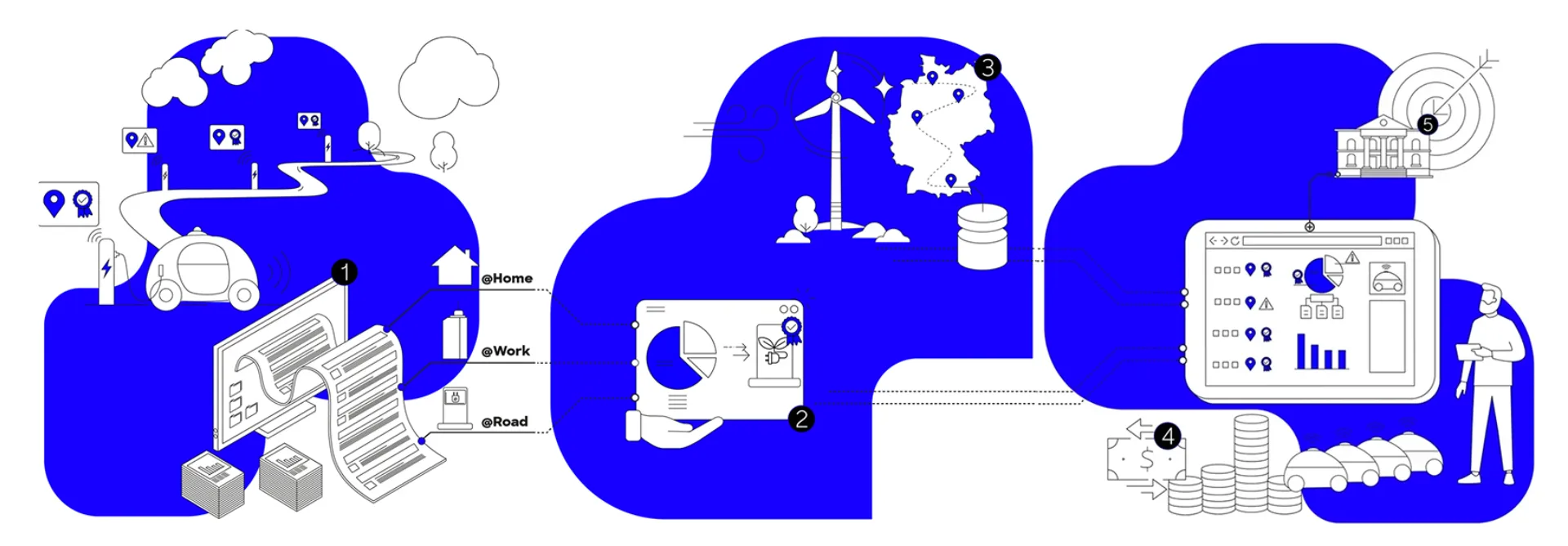
The carbon footprint of electric vehicles depends on where their charging electricity comes from. Emissions are estimated using two methods: the emission factor of the electricity physically available on the grid (location-based) and the electricity supply contract (market-based). Tracking emissions across different charging stations (1) with these methods is extremely difficult. Yet it is mandatory for fleet operators and car manufacturers when they report and reduce their carbon footprint.
Approach
Actionable data
Today, many charging station operators, whether at home, at work or on the road, buy green electricity contracts, but drivers usually never see proof of them. To provide actionable data for emissions accounting, two things are needed: (2) contract information for every location and (3) detailed emission factors for the grid mix that is physically available. This lets drivers adapt their charging behavior to reduce their EV’s carbon footprint.
Potential
Report and reduce
Two things are needed to meet this challenge: verifiable, detailed emission factors to reduce the physical carbon footprint of EVs, and tamper-proof contract information. If both are made available on an ecosystem-wide platform where data providers and data users exchange emissions data (4), fleet operators and OEMs can meet their sustainability reporting requirements (5) and be transparent about their ambitious decarbonization targets.
We Talked to More Than 30 Experts to Understand the Problem
The Challenge of Market-Based Emission Accounting for Charging
-
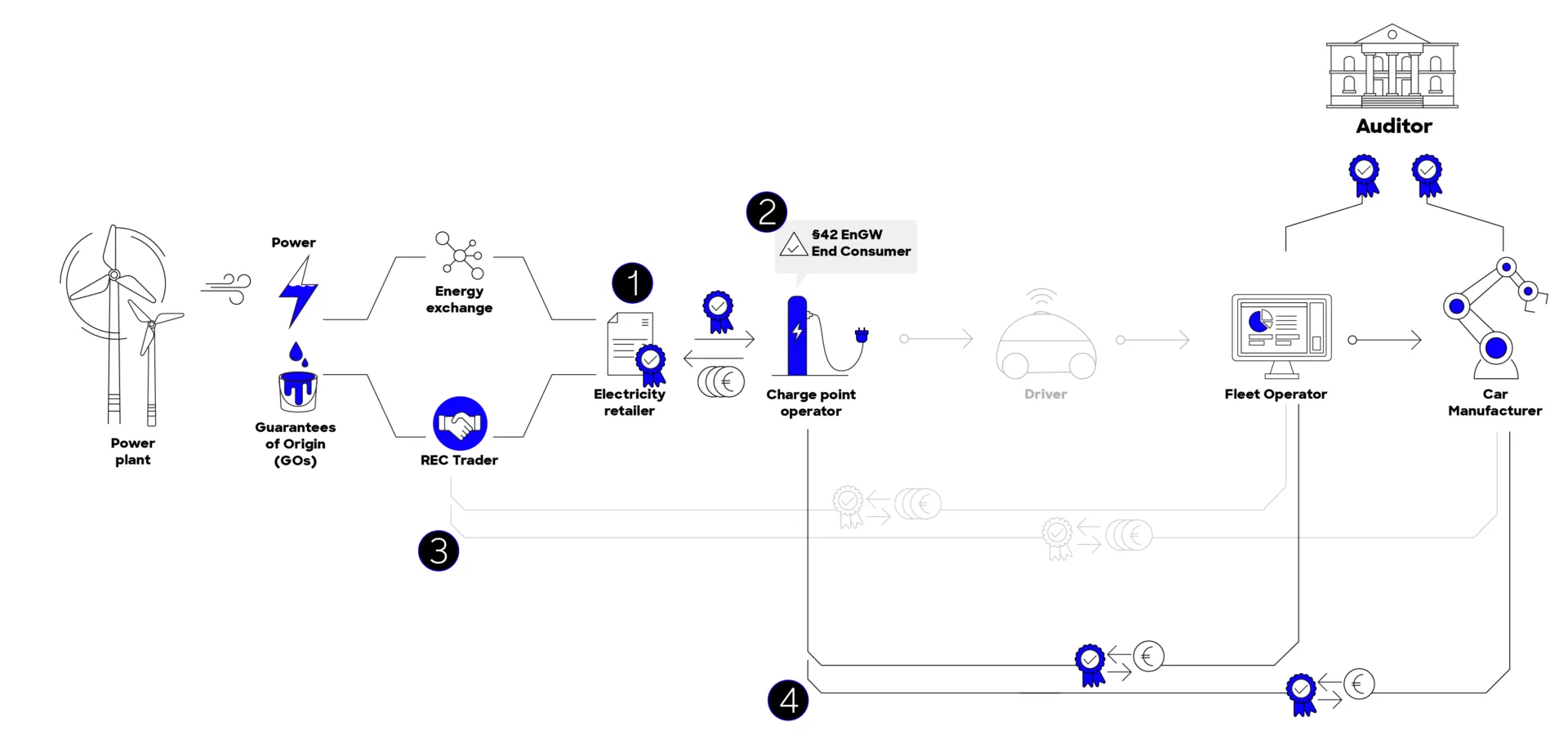
Green electricity contracts consist of electricity and renewable energy certificates bought separately.
-
Public and private charge point operators often advertise the supply of 100% green electricity. Because they are the “end consumer” as defined by Section 42 of the German Energy Industry Act (EnWG), they do not share auditable proof with downstream stakeholders.
-
Today, fleet operators and car manufacturers either use the residual mix or resort to buying guarantees of origin (GOs) themselves in order to reduce market-based emissions for their fleets.
-
In the future, fleet operators and car manufacturers could incentivize charge point operators to procure green electricity and to provide auditable proof by covering a part of the cost of GOs.
Our Partners






Impressions















Contact
-

Dr. Johanna Bronisch
Head of Energy Innovation
-

Elena Schelling
Consultant Innovation & Business Creation