About the project
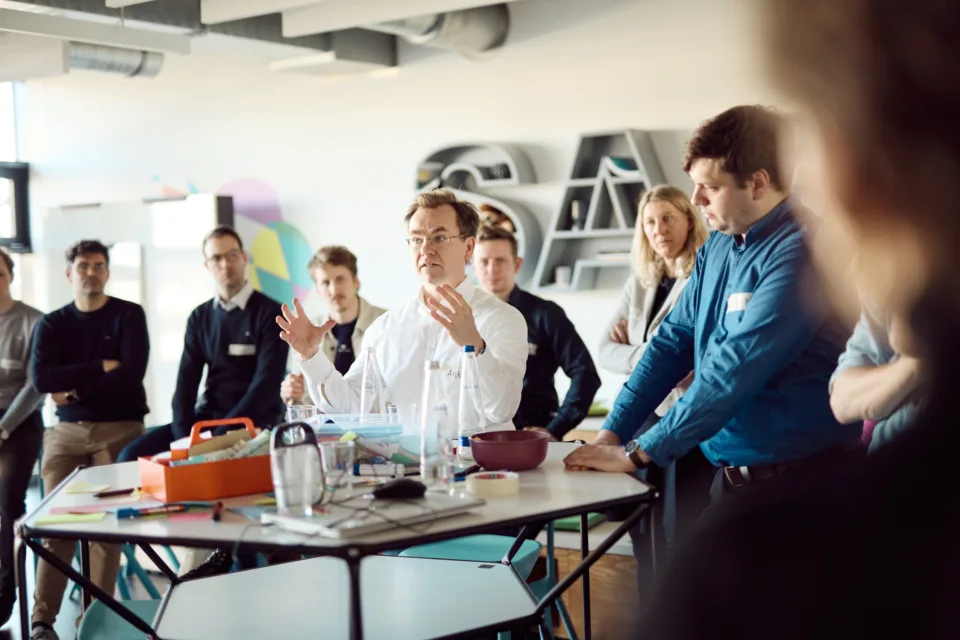
How much quality of life is gained when cars make room? The Digital Hub Mobility explored this question together with the BMW Group, Aisin, Designit, the City of Munich and the Bundeswehr University Munich as part of the Co-Innovation format citizen mobility. In an urban experiment, we let citizens experience first-hand what mobility without a private car feels like and what parking space can become when it is put to new use.
1. The challenge
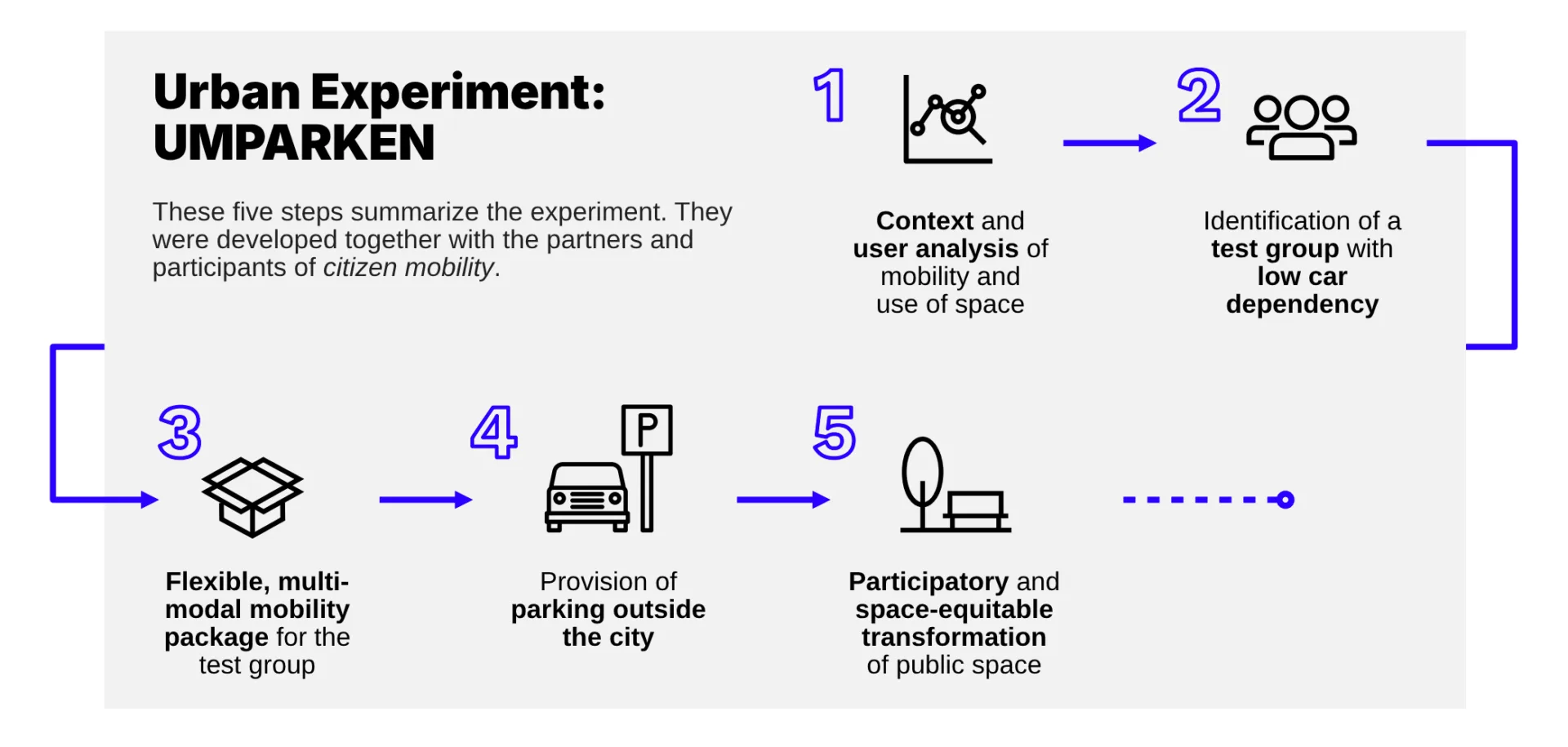
In dense city centers, public space is scarce, and much of it is taken up by parked cars. A single parking space occupies around 12 m², as much as a child’s bedroom. Yet a residents’ parking permit in Munich costs just €30 a year. At the same time, according to a study by the BMW Group and KIT, around a third of Munich’s car owners hardly depend on their own vehicle in everyday life. Our question: Are the existing alternatives enough to stay mobile without a car of your own, and what added value does the freed-up space create?
2. Our approach
In summer 2020, eight households (five couples, three families) from Schwabing-West, a neighborhood with very high parking pressure, gave up their cars for four weeks. The vehicles were “re-parked” at a park-and-ride facility on the outskirts of the city. In return, the households received a digital mobility budget of €300 covering sharing, rental, public transport and long-distance travel options. Startups played a central role: Moovster managed the budget in an app, Veomo displayed all mobility options live on a dashboard, and evhcle provided an exclusive e-scooter sharing service.
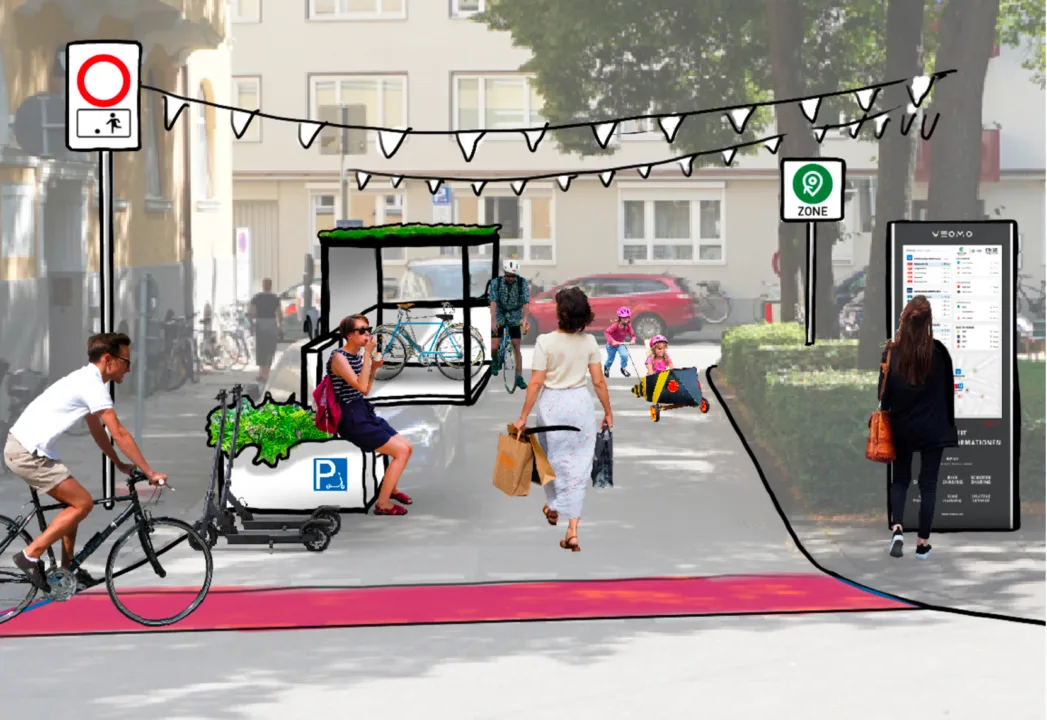
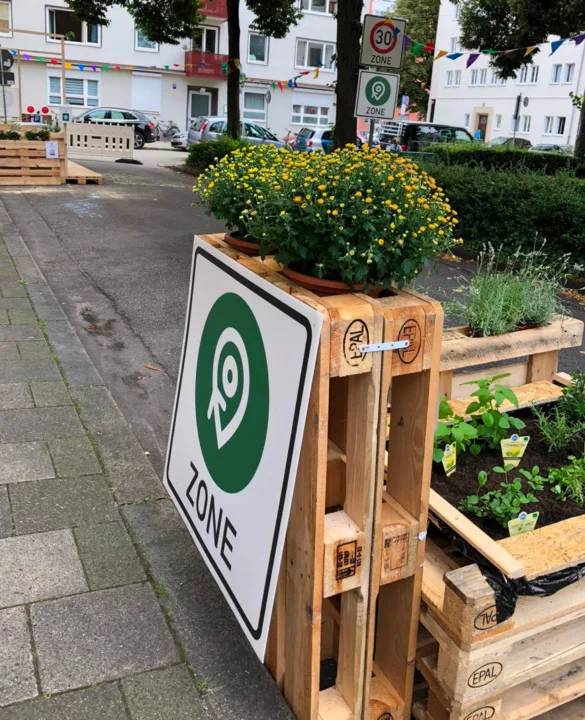
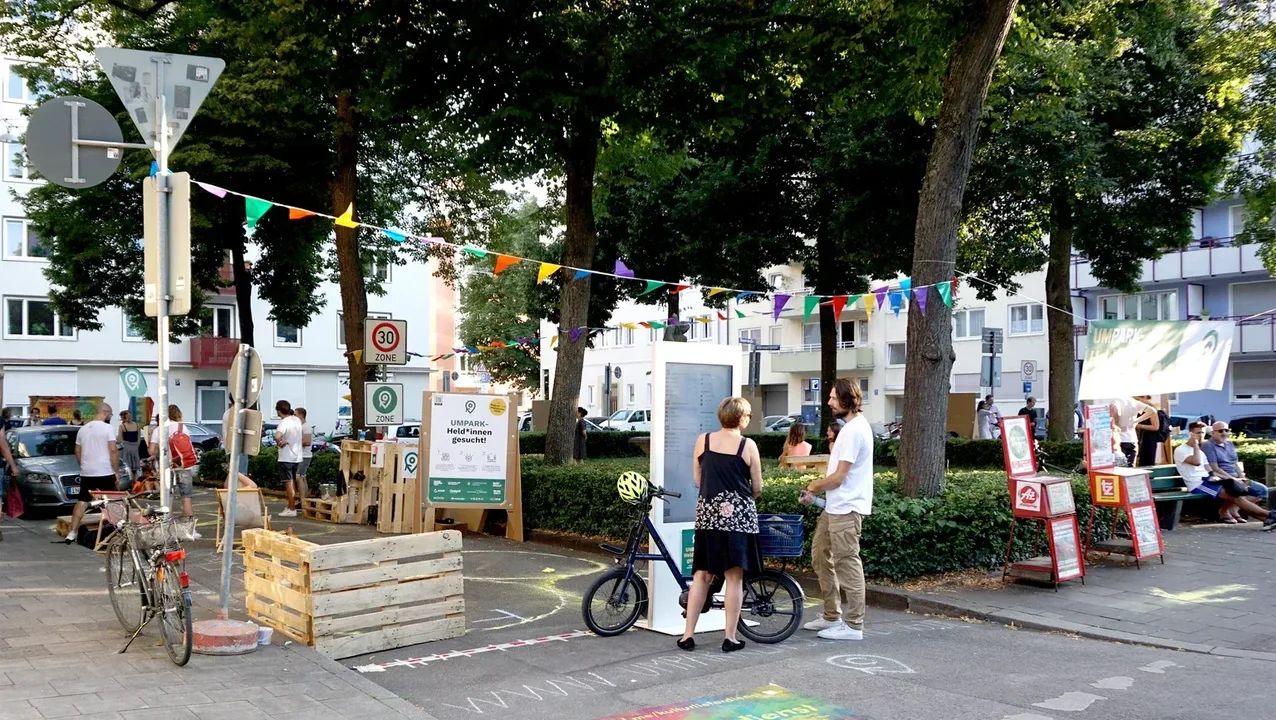
Together with local residents, we redesigned the four freed-up parking spaces. Following an UMPARK day and a citizens’ dialogue, to which we deliberately also invited critics, a play street took shape at the corner of Hiltenspergerstraße and Hohenzollernstraße from 24 August to 18 September 2020. It featured Designit’s modular VeloHub, parking for bikes and scooters, and a herb garden. Throughout the experiment, we evaluated mobility diaries, surveys, booking data and interviews.
3. Results
The experiment reveals a large, real potential for reducing car use in cities:
- High satisfaction: On average, participants rated life without their own car 9 out of 10.
- Everyday life works without a car: Cycling and public transport formed the backbone, and everyday mobility barely changed.
- Real impact: 3 of the 8 households gave up their car after the experiment. Average mobility costs were below €200 per household, well below the full cost of owning a car.
- The weekend gap: High daily rental prices, limited availability and a lack of child seats make trips out of the city the biggest hurdle. Better weekend options are the most important lever.
- Participation is key: Repurposing parking space is polarizing. Early, clear communication and an open dialogue with residents are crucial for acceptance.
- A platform for startups: The participating startups were able to test their solutions in real-world operation; along the way, evhcle identified the need for a sharing system for (electric) cargo bikes.
4. Outlook
UMPARKEN shows that reducing car use in cities is not an abstract goal – it can already succeed today when attractive alternatives are available. Implemented in just around three months and with limited resources, the experiment delivered many valuable insights, and the extensive media coverage underlines the relevance of the topic. We see great potential for innovation above all in flexible weekend offerings and user-friendly digital interfaces. The participants’ high satisfaction should encourage urban decision-makers to break new ground and carry out similar experiments in other neighborhoods and cities.
More information about the project
Our Partners








Contact
-

Dr. Bernhard Kalkbrenner
Director Digital Hub Mobility