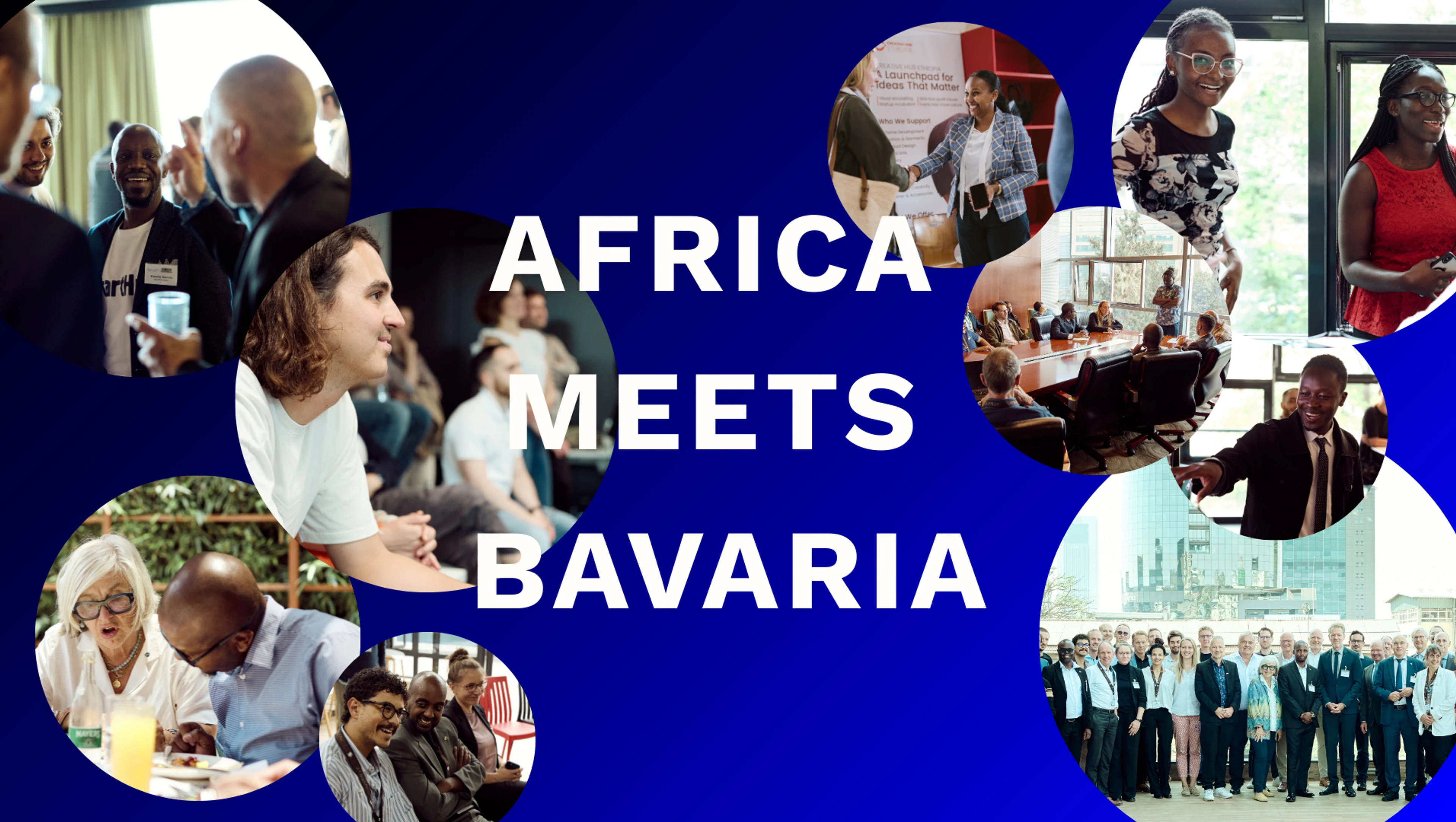
September 2025, Nairobi.
It is the beginning of our first Learning Visit to Africa. At the very start, Steffi Czerny, Managing Director at DLD Media, takes the floor and shares a sentence that sets the tone for everything that follows:
The question is not what Africa can learn from us, but what the world can learn from Africa.
Steffi Czerny
For a brief moment, the room falls silent. Not out of politeness. But because it becomes clear that something is shifting. A perspective. Perhaps even a mindset.
What was articulated in that moment proved true in the days that followed and throughout two years of intensive project and network collaboration: this shift in perspective was not a passing remark.
Africa is not a future promise invoked on conference panels. In cities such as Nairobi, Lagos, Accra, and Addis Ababa, some of the world’s most dynamic tech ecosystems are emerging. Innovation is driven by speed, entrepreneurial energy, and a clear focus on real-world applications.
As a result, solutions emerge that work: robust, cost-efficient, scalable.
More than 1.4 billion people live on the African continent, with a median age under 20. A young, entrepreneurial generation is building companies not out of theoretical interest, but out of ambition and necessity. Anyone seeking to understand what the markets of the future will look like cannot overlook these ecosystems.
For European deep-tech startups, they are no longer a footnote but real testing grounds. At the same time, African tech companies are increasingly expanding into Europe with business models that rethink efficiency and impact.
This dynamic makes one thing clear: this is not about isolated collaborations, but about long-term, resilient partnerships.
At a time when the geopolitical landscape is being reshaped, such relationships are gaining strategic importance. European Commission President Ursula von der Leyen puts it succinctly:
We should offer win-win partnerships to emerging economies that want to work with us. But we must be fast and concrete.
Ursula von der Leyen
That this is not only about cooperation on equal footing but also about tangible entrepreneurial value is emphasized by Johannes Willms, Managing Director at UnCap:
“Our motivation for participating in the Africa Meets Bavaria program was to make the ‘Africa Rising’ perspective visible and to show how much German companies can learn from partnerships built on equality.”
Two years of Africa Meets Bavaria demonstrate that where shifts in perspective meet concrete implementation, entrepreneurial bridges emerge that truly hold.
And this is precisely where the program’s strategic dimension lies.
“When we speak about building bridges, we do not mean symbolic exchange,” says Lara Knödler. “It is not about aid narratives. It is about strategic partnerships that help both sides remain competitive.”
When Encounters Turn into Collaboration
When Africa Meets Bavaria was launched with the support of the Bavarian State Chancellery, the idea was clear: connect innovation ecosystems, strengthen entrepreneurial talent, and enable long-term cooperation.
What has developed since cannot be fully captured in KPIs, even though the numbers speak for themselves and are visible in the accompanying graphic.
By summer 2026, the programme will have reached the following numbers:
- 400 participants in the digital entrepreneurship course ‘From Zero to Hero’
- 180 participants in the master class programme
- 20 participants in the ‘Innovation Exchange’ format
- Over 30 participants in study visits
What matters is what has grown beyond the metrics.
Munich-based startups that welcomed talents from partner countries consistently report collaboration that evolved faster and more sustainably than expected. Time-limited fellowships developed into long-term partnerships. Teams continue to work together, projects have deepened, and joint initiatives have become permanent.
Two Munich startups have since opened offices in Nairobi and Mombasa, not as symbolic outposts but as deliberate investments in growing markets and highly qualified talent pools.
New doors have also opened for the talents themselves. Several participants applied for EXIST founder scholarships following the program. Others launched entrepreneurship initiatives at their local universities, building structures where few support systems previously existed.
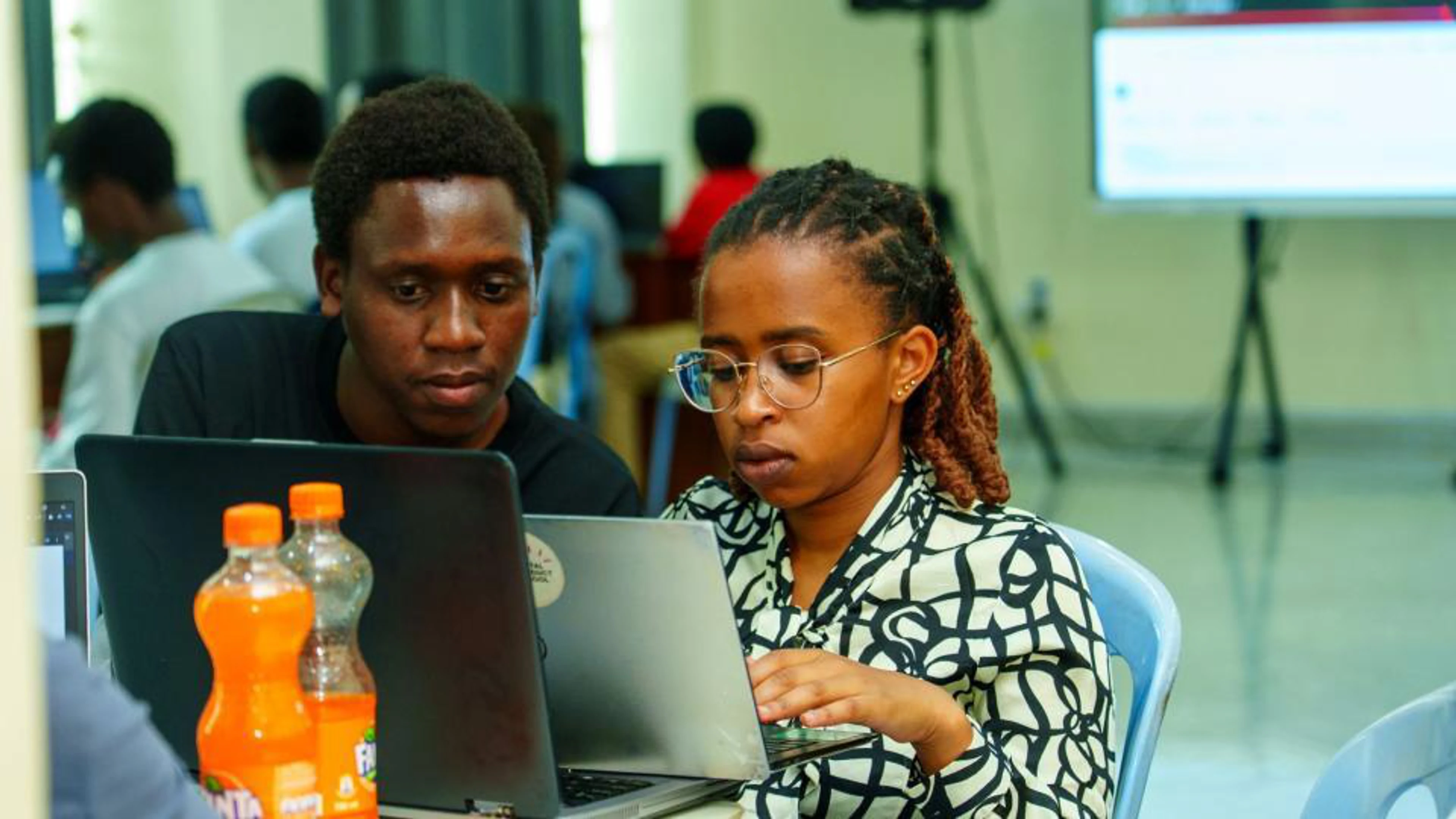
Clifford Musyoka, Innovation Exchange participant and mentor at Mount Kenya University in Nairobi.
One participant spoke shortly thereafter at the Munich Cyber Security Conference as an expert in a globally relevant field.
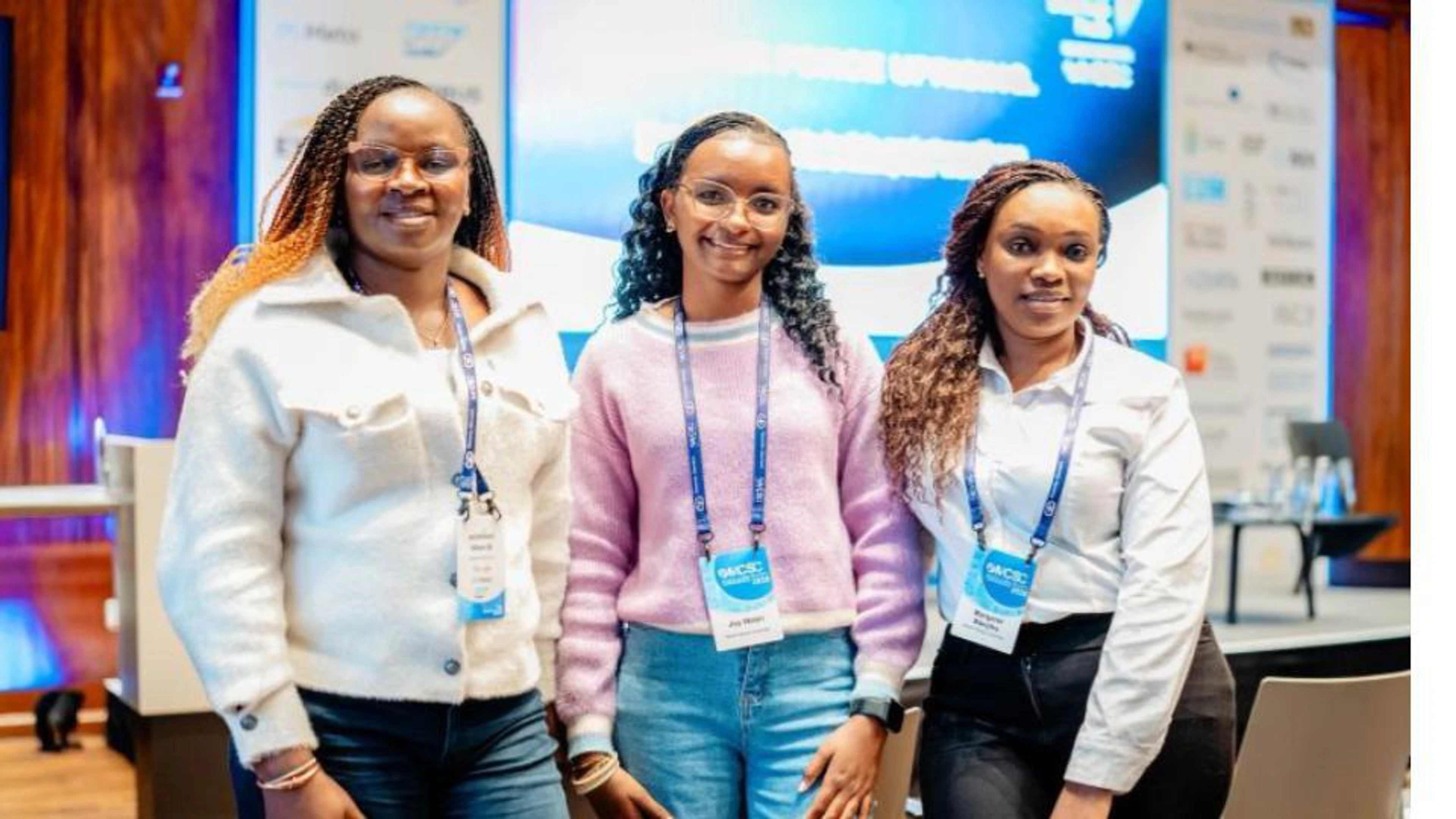
Joy Watiri (center) together with her mentor Margret Mwinji (right) at the Cyber Security Conference in Munich.
What has grown cannot be planned. It emerges from trust, continuity, and a genuine commitment to collaboration. That is the quality of lasting partnerships.
Rewla Ephrem, founder and program participant, puts this mindset into words:
Leadership means learning from every perspective and building bridges instead of silos.
Rewla Ephrem, founder and programme participant
What has emerged is more than a network. It is a community of innovators who share this mindset: staying curious, taking responsibility, and forging new paths.
Science Entrepreneurship in a New Reality
What has developed over the past two years points to a broader transformation. For Bavaria, with its strong research and deep-tech landscape, this opens up a clear strategic opportunity. African innovation hubs are working at remarkable speed on solutions for food security, energy resilience, circularity, and cyber security, topics of global relevance.
International partnerships are no longer an add-on. They are becoming instruments of resilience, diversification, and shared innovation capacity.
The next step is to deepen this collaboration, particularly in the field of science entrepreneurship: bringing research into application together, scaling technological excellence jointly, and developing markets collaboratively.
In September 2026, we are planning our second Learning Visit to Ghana and Nigeria. Companies, investors, and ecosystem actors who wish to actively contribute and build long-term partnerships are invited to get in touch with us.
Perhaps it begins, as it did in September 2025 in Nairobi, with a simple question: What if we can learn more from one another than we have so far assumed?
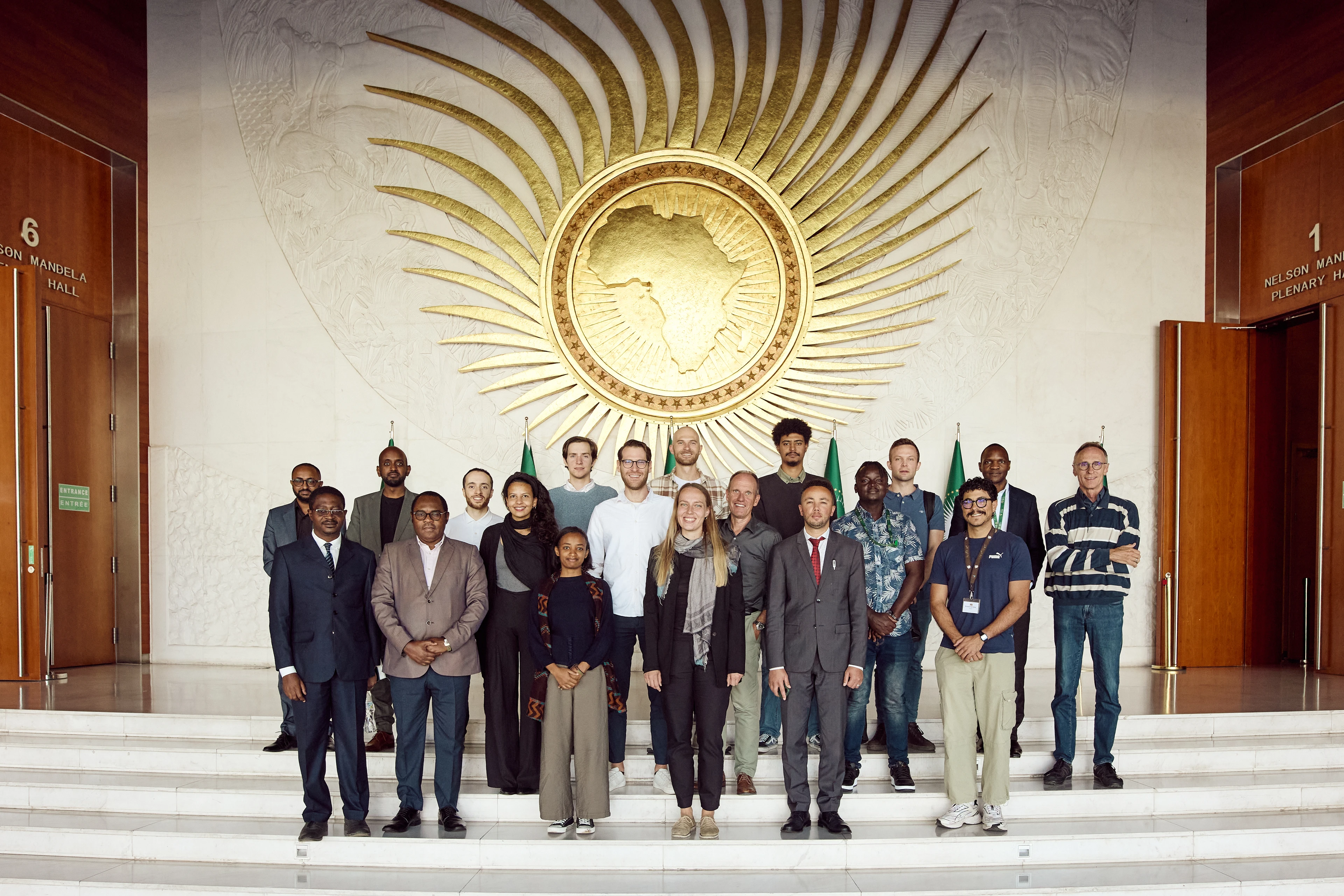
The Africa Meets Bavaria team together with delegation participants and representatives of the African Union in Addis Ababa
Gefördert durch die Bayerische Staatskanzlei